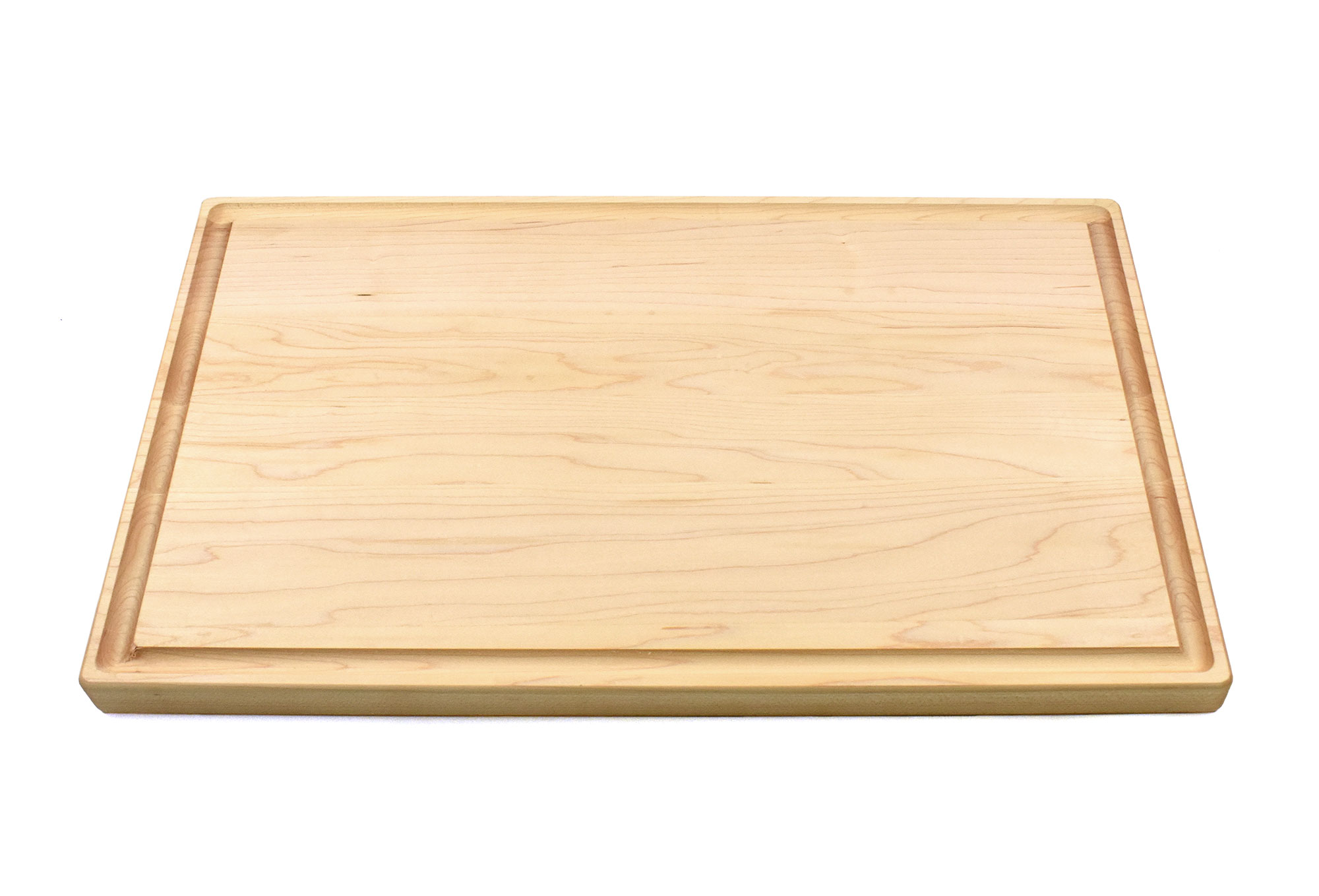
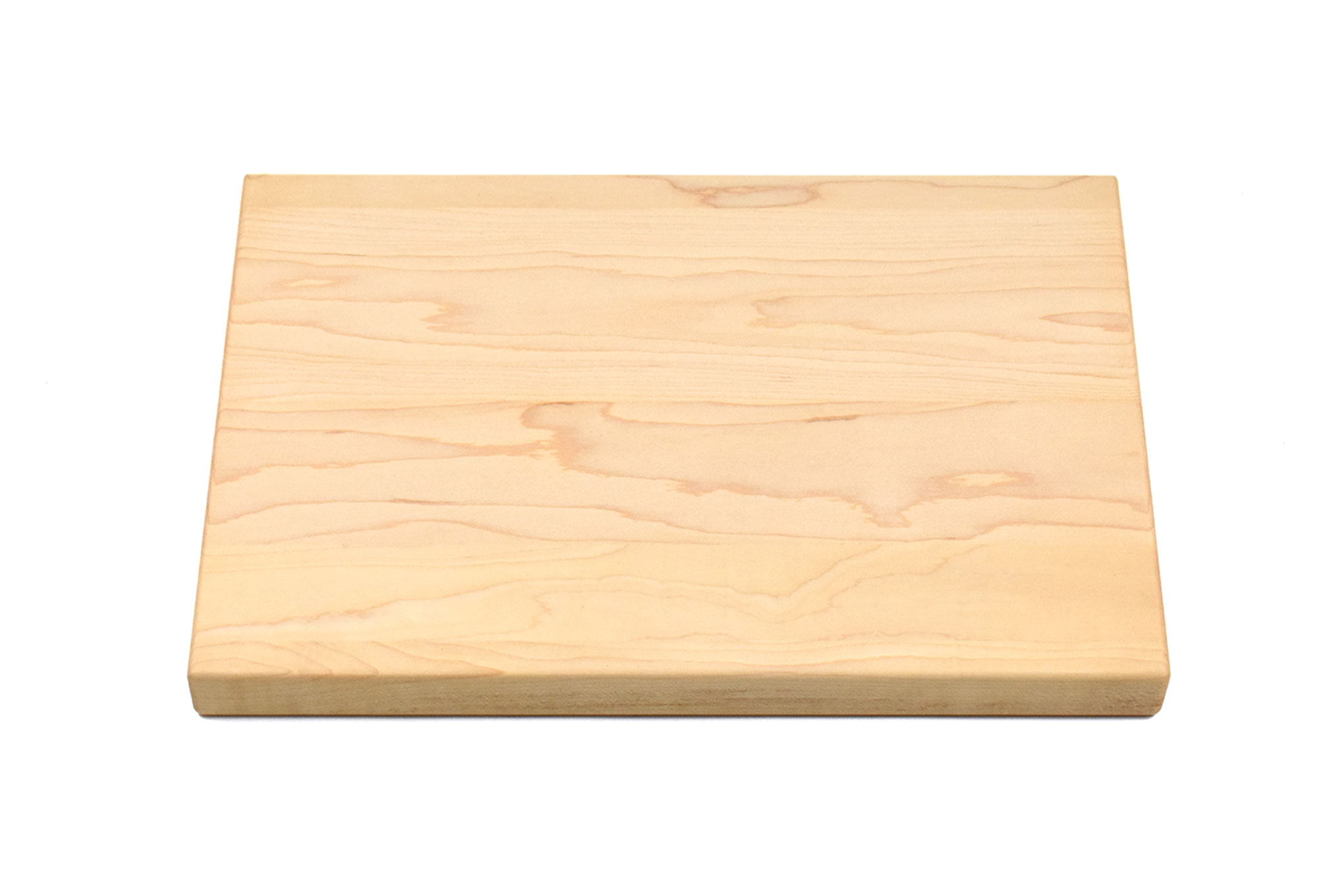
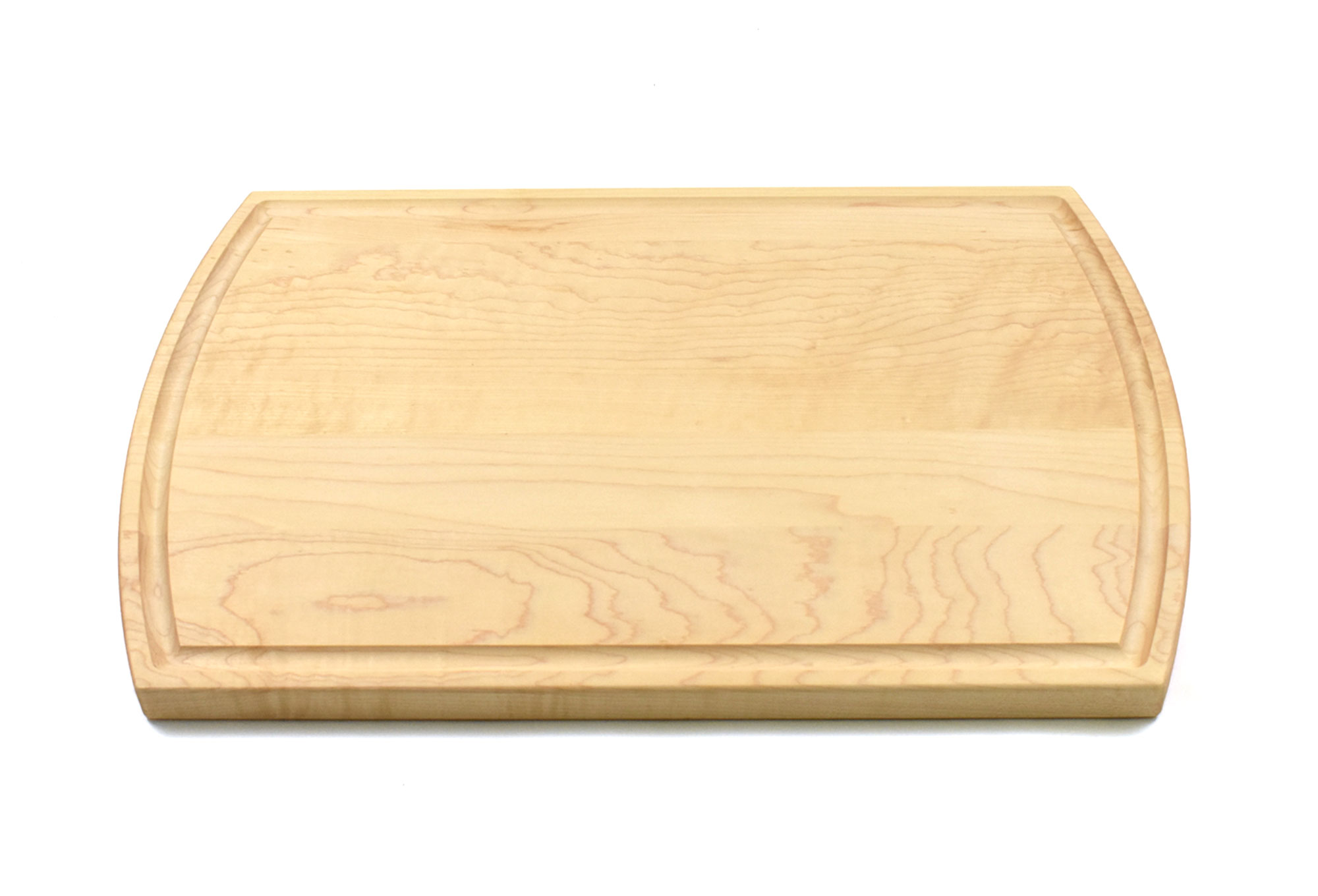
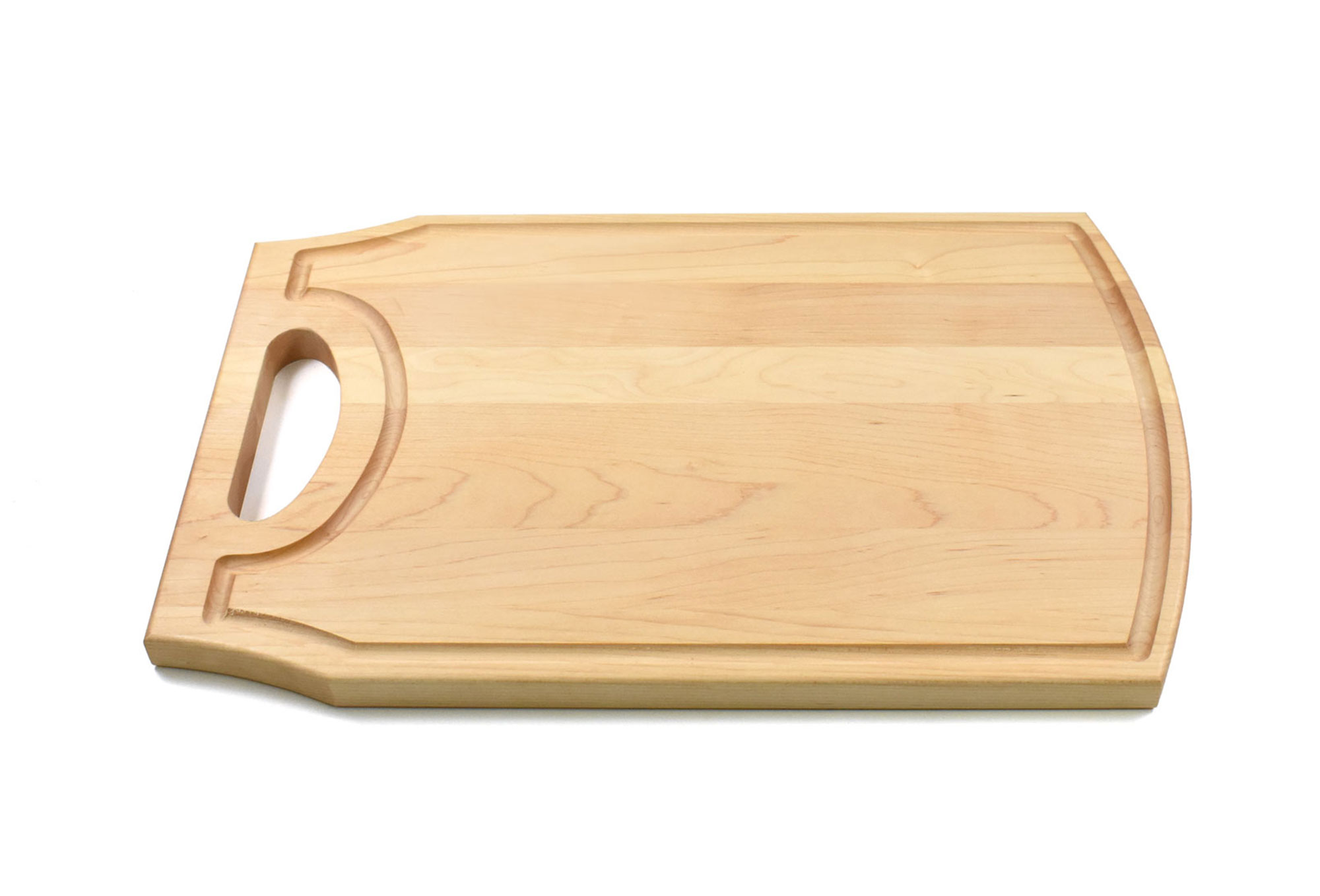
.png)
A practical guide to food-safe oil finishes, maintenance expectations, and finish options for wholesale wooden boards.
Wooden boards remain a popular product across retail, hospitality, promotional, and gift markets. Their appearance and long-term performance depend greatly on the finish applied to the wood.
For distributors and wholesale buyers, this makes oil finish selection an important part of product quality. The right finish can help maintain the wood’s appearance, support food-safe use, and make ongoing care more manageable. The wrong finish, however, can create confusion for customers, affect product performance, or make a board unsuitable for food contact.
Understanding which oil finishes are appropriate for wooden boards—and which ones should be avoided—helps wholesale buyers make more informed product decisions and better communicate value to their own customers.
Wood is a natural material that can dry out over time, especially when exposed to repeated washing, changes in humidity, and everyday use. Oil finishes help condition the wood, reduce dryness, and support a more even, rich appearance.
On wooden boards, oiling is not mainly about creating a glossy decorative surface. Instead, it is typically used to nourish the wood fibers and help protect the board from looking dry or worn prematurely. This is especially important for products that will be handled often, displayed in retail settings, or used in kitchens and food-service environments.
A well-oiled board generally looks more complete, feels better finished, and presents more clearly as a quality product. For wholesale buyers, this can influence customer perception at the point of sale and improve the overall presentation of the item.
For boards that may come into contact with food, the safest approach is usually the simplest one. Appropriate finishes should be clearly intended for food-contact wood products and should condition the wood without creating a surface coating that can chip, crack, or wear unevenly.
The most commonly used options are mineral oil and mineral oil–beeswax blends.
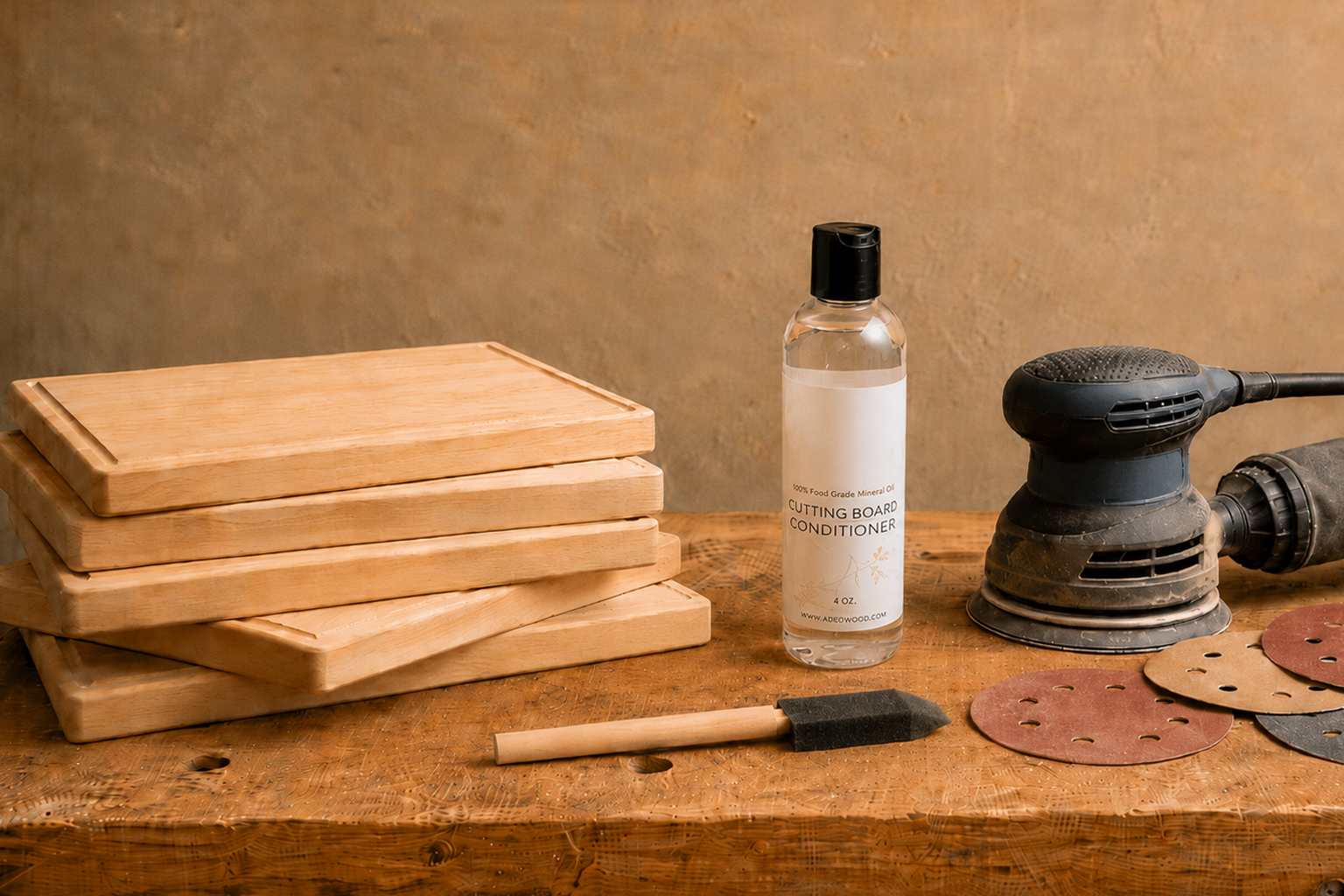
Mineral oil remains one of the most widely used finishes for cutting boards and butcher blocks. It is popular because it is colorless, odorless, and appropriate for food-contact applications when sold for that purpose. It penetrates the wood rather than sitting on top of it, which helps preserve a natural look and makes reapplication simple.
Mineral oil and beeswax blends are also commonly used when a board needs both conditioning and a slightly richer finished appearance. These blends help nourish the wood while leaving a more polished surface, which can be especially appealing for charcuterie boards, serving boards, and gift-oriented products.
For wholesale buyers, these finishes are generally the most practical because they are familiar, straightforward to maintain, and aligned with customer expectations for wooden kitchenware.
Not every wood finish is appropriate for a board that may be used in the kitchen. Some finishes may work well on furniture or decorative wood items, but are not ideal for food-contact boards.
Vegetable oils such as olive oil, corn oil, or canola oil are generally not recommended as a primary board finish. While they may sound natural or appealing at first, these oils can become unstable over time and may develop unpleasant odors as they age.
Film-forming finishes such as varnish, lacquer, shellac, or standard polyurethane are also generally poor choices for cutting boards and other food-use boards. These finishes create a surface coating rather than conditioning the wood itself. With repeated cutting, washing, and use, that coating can wear unevenly, crack, or peel, which is not desirable on a food-contact item.
Unknown decorative oils or general wood treatment products should also be approached carefully. If a finish is not specifically intended for food-contact wood surfaces, it may create unnecessary risk or confusion.
For strictly decorative boards that are not intended for food use, some non-food-contact finishes may be acceptable. However, if the product category overlaps with serving, gifting, or kitchen use, it is usually better to stay with finishes that align with food-safe expectations.
A common question in the wooden board market is whether plain mineral oil or an oil-wax blend is the better choice. In practice, each has advantages depending on the product type and the intended customer experience.
Mineral oil offers a very simple and functional finish. It penetrates easily, enhances the wood tone, and is straightforward to maintain. This makes it a practical option for cutting boards and other products where ease of care matters most.
Oil-wax blends typically provide a slightly richer finished appearance. They may help the wood feel more polished and can be especially attractive on gift items, charcuterie boards, and higher-end presentation pieces.
From a wholesale perspective, the decision often comes down to product positioning. For utility-focused cutting boards, mineral oil is often enough. For premium presentation boards, oil-wax blends may offer a stronger visual appeal.
Oil-finished wooden boards require maintenance. That is not a drawback so much as a normal part of owning a natural wood product. Still, it is important for wholesale buyers to understand this clearly, since customer expectations often affect satisfaction after purchase.
Unlike heavily coated products, oil-finished boards need occasional reapplication to maintain their appearance. Over time, washing and regular use gradually remove surface conditioning. When the board begins to look lighter, drier, or less even in tone, it typically needs to be re-oiled.
For wholesalers and retailers, this creates an opportunity to educate customers rather than treat maintenance as a negative. Clear care instructions can help buyers understand that occasional oiling is part of preserving the natural beauty of the wood.
When sourcing wooden boards, finish details should be part of the conversation. Buyers should not assume that all oil finishes are the same or that every wood board has been prepared with the same end use in mind.
Useful questions include:
• What type of oil or finish is being used?
• Is the finish appropriate for food-contact use?
• Does the finish create a penetrating treatment or a surface coating?
• What maintenance should be recommended to customers?
• Is the finish aligned with the board’s intended use?
For wholesale programs, having clear answers to these questions supports better merchandising, better product education, and fewer issues after sale.




 Manufactured in
 BRANDING SERVICES