Promotional products are most effective when they offer more than a momentary impression. While many giveaway items are quickly forgotten or discarded, practical products tend to stay in use longer and continue reinforcing brand visibility over time. For businesses investing in promotional merchandise, this makes product selection especially important.
Wooden promotional items can be a strong option in this context. They often feel more substantial than disposable giveaways, and many also serve a real everyday purpose. When a product is useful, visually appealing, and well suited to branding, it is more likely to be kept, reused, and appreciated by the end customer.
One of the biggest challenges in promotional merchandising is choosing products that remain relevant after the initial event, campaign, or handoff. Items that are used regularly can continue to expose the recipient to a brand long after they are received.
Practicality plays an important role here. A product that supports everyday tasks, fits naturally into a home, office, kitchen, or travel setting, and offers consistent usefulness often delivers better long-term value than something novelty-based or purely decorative.
For distributors, retailers, and businesses ordering promotional products in volume, this can make practical wooden items an appealing category. They combine function with presentation and can often be customized to reflect a brand in a more polished way.
Wood has a warmth and visual character that many standard promotional materials do not offer. It tends to feel more durable, more intentional, and more giftable. This can make even smaller accessories feel more premium.
Wooden products also work well across different markets. Depending on the product type, they may suit corporate gifting programs, hospitality use, tourism retail, specialty shops, branded merchandise programs, and seasonal promotions.
Another advantage is customization. Engraving can add a logo, business name, or simple design in a way that feels integrated into the product rather than added on as an afterthought. This helps support a cleaner branded look while maintaining the character of the item itself.
Bottle Openers
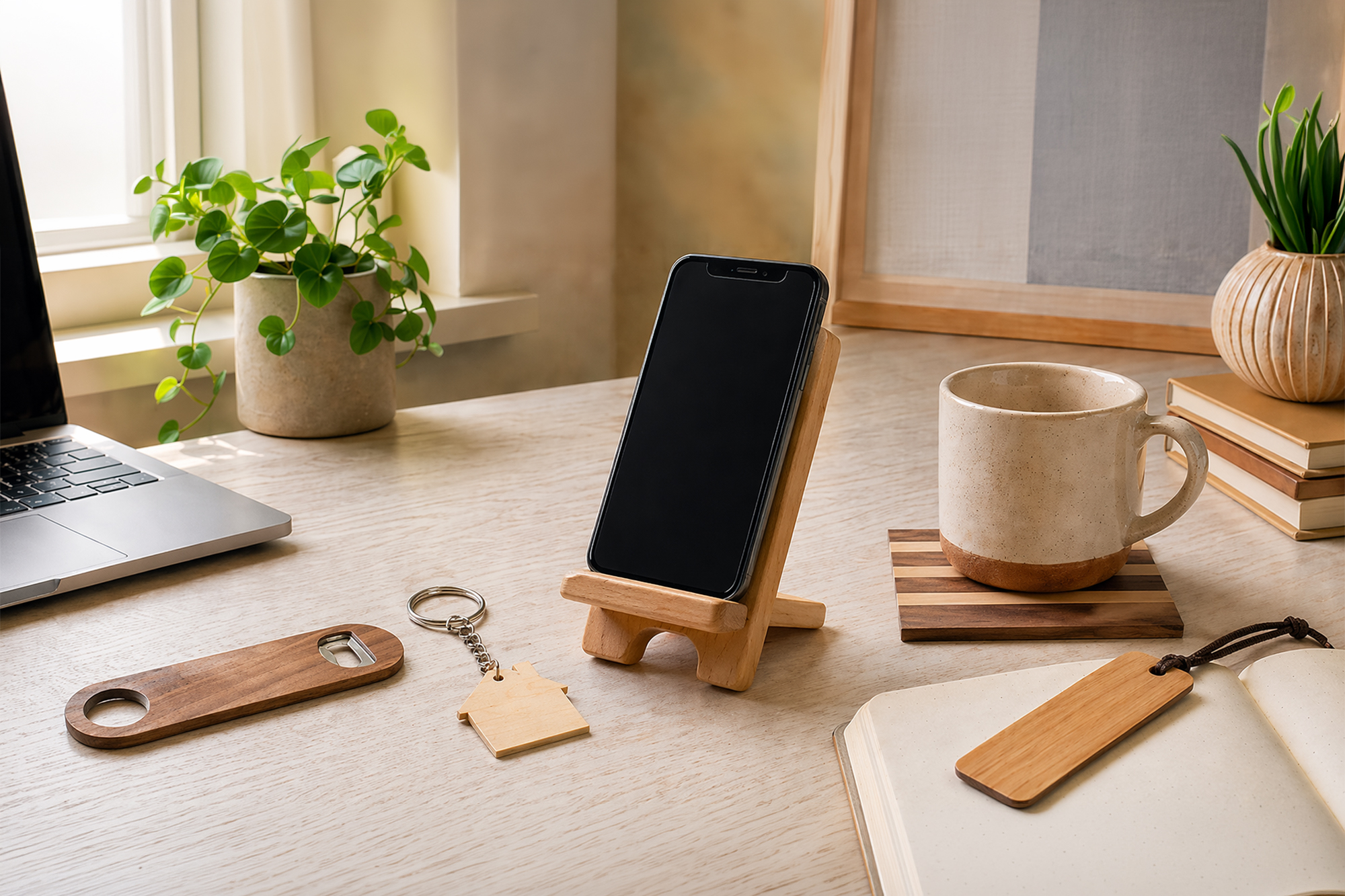
Bottle openers are one of the clearest examples of a practical promotional product. They are simple, recognizable, and easy to use in everyday settings. Because they serve a clear purpose, recipients are more likely to keep them in a kitchen drawer, home bar, cottage, or travel bag.
For businesses, bottle openers can work well for beverage-related brands, hospitality programs, tourism retailers, and general client gifting. When made from wood and engraved with branding, they can also feel more distinctive than standard metal or plastic alternatives.
Phone Stands
Items that fit naturally into a desk or workspace can offer repeated brand exposure. A wooden phone stand, for example, supports a daily habit without feeling overly promotional. It can remain visible on a desk, counter, or bedside table and continue to serve a useful role over time.
This type of product works especially well for office-oriented branding, employee gifts, modern workspaces, and branded merchandise programs that prioritize utility.
Keychains and Small Accessories
Smaller products can still be effective when they serve a practical purpose. Keychains, tags, and other portable accessories are easy to distribute and often appeal to a broad audience.
Their value comes from frequency of use. Even when the product itself is simple, a recipient may interact with it daily. In many cases, this repeated visibility can be more valuable than a larger item that is rarely used.
For wholesale buyers, these categories can also be attractive because they are versatile. They may fit gift shops, visitor centers, tourism programs, seasonal promotions, and general branded merchandise assortments.
Coasters
Coasters are practical, easy to store, and suitable for both home and office use. They also offer a flat surface that can work well for customization, making them a natural choice for branded programs.
Because they are often used in shared spaces such as meeting rooms, kitchens, lounges, and dining areas, coasters can provide visibility beyond the original recipient. They are also easy to pair with other products as part of a broader gift set or coordinated merchandise program.
Bookmarks and Lightweight Gift Items
Bookmarks and other compact wooden products can be a strong option when businesses want something simple, giftable, and easy to distribute. These items may not be high utility in the same way as a phone stand or bottle opener, but they still offer a clear function and can feel more thoughtful than generic paper-based alternatives.
They are especially useful for museums, bookstores, tourist shops, educational settings, and seasonal gift programs where presentation matters as much as price point.
Not every product is right for every business or campaign. The most effective choice depends on who the item is for, how it will be used, and what kind of brand experience the business wants to create.
A hospitality business may prefer bottle openers or coasters. A corporate office may lean toward phone stands. A tourist store may benefit from smaller giftable products that are easy to carry and display. Retailers may also want a mix of products at different sizes and price points so they can appeal to different customer needs.
Thinking about the end user helps create a stronger promotional program. Products that feel relevant to the recipient are more likely to be used and retained.
Customization can help turn a practical product into a branded one without reducing its usefulness. Engraving is especially effective on wood because it creates a clean, natural-looking mark that often feels more permanent and refined than printed branding.
For wholesale buyers, this adds flexibility. The same base product can be adapted for different businesses, campaigns, or retail environments while maintaining a consistent product standard. This is particularly useful for branded gift programs, promotional merchandise, hospitality branding, and client appreciation initiatives.




 Manufactured in
 BRANDING SERVICES