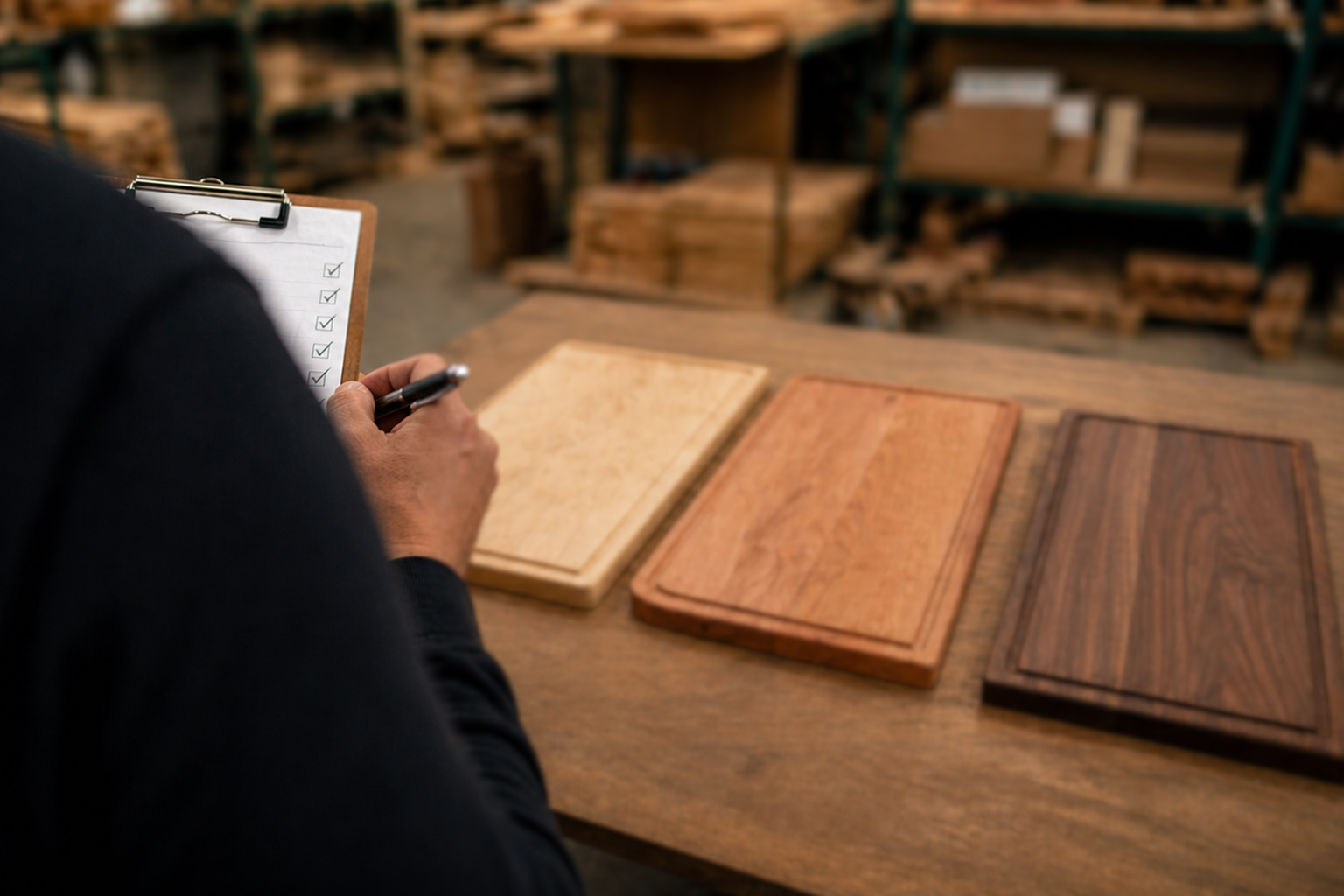
Not all wood species perform the same in the kitchen. While many hardwoods look beautiful, only a few offer the right balance of durability, food safety, and long-term performance needed for a quality cutting board.
In this guide, we break down the most popular woods used for cutting boards — and explain which one is best for your cooking style, maintenance preferences, or engraving needs.
Why Wood Choice Matters
The type of wood used in a cutting board affects everything from knife wear to moisture resistance. The best cutting board woods are hardwoods with tight grain structures that resist deep cuts and limit moisture absorption.
Hard Maple: The Industry Standard
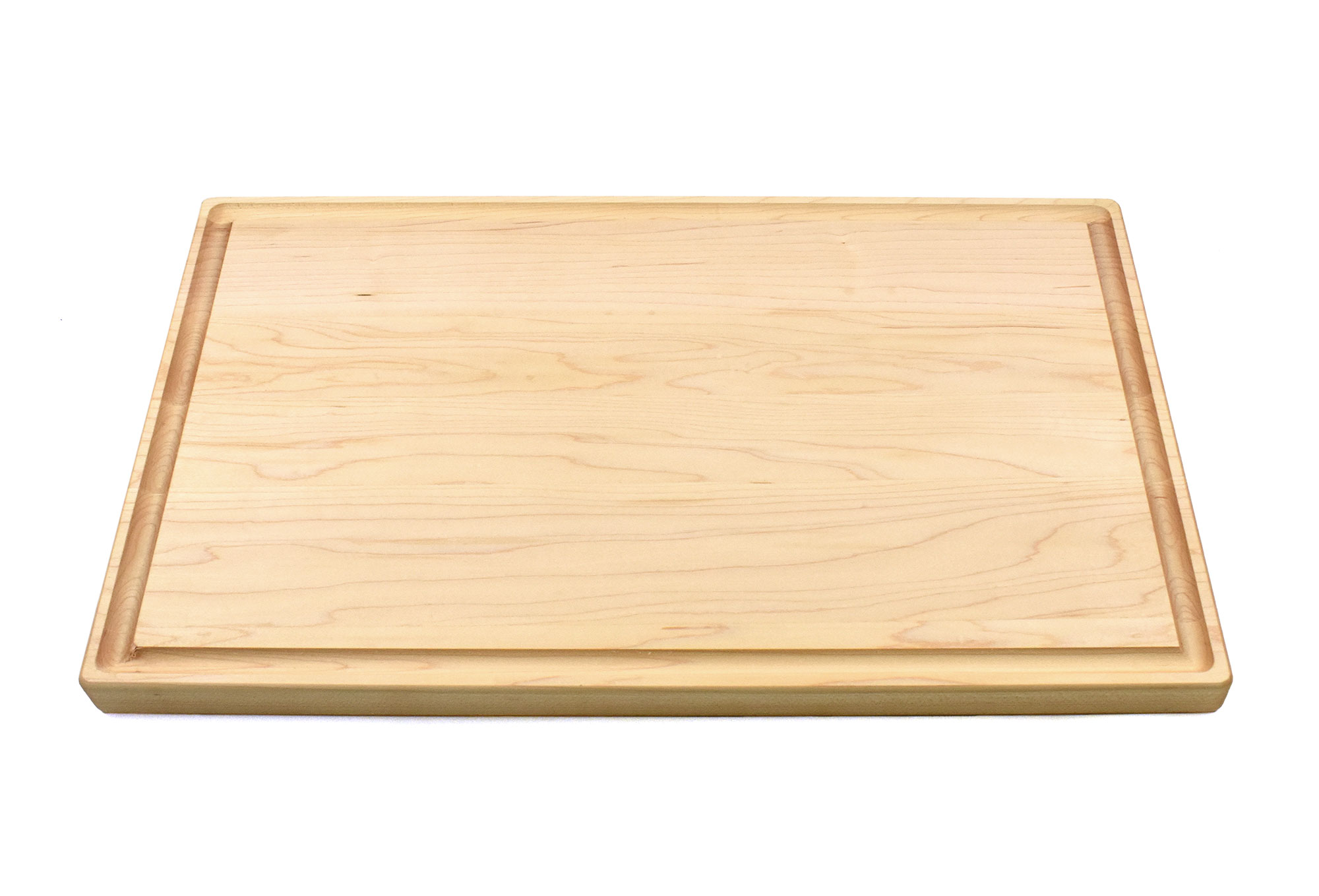
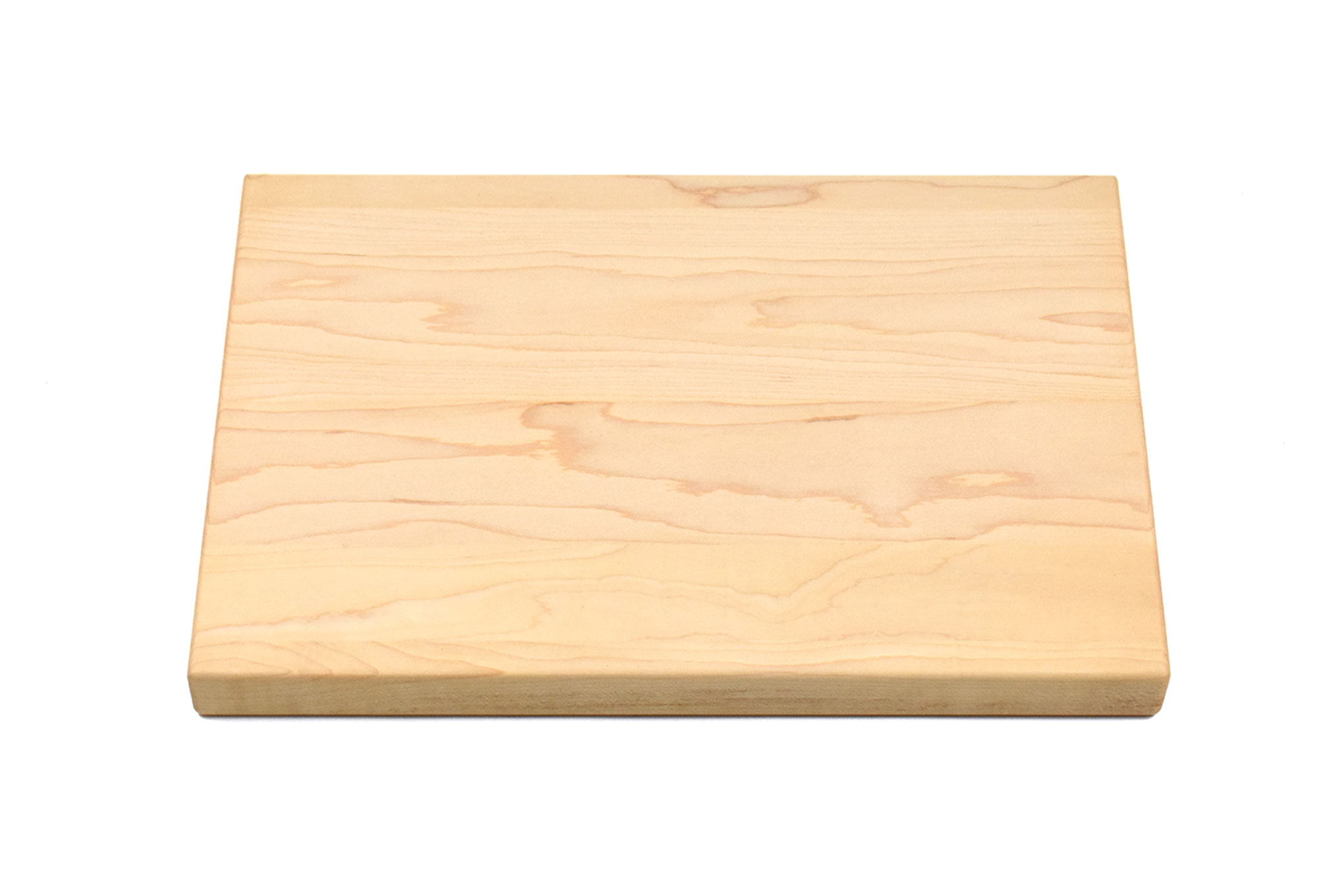
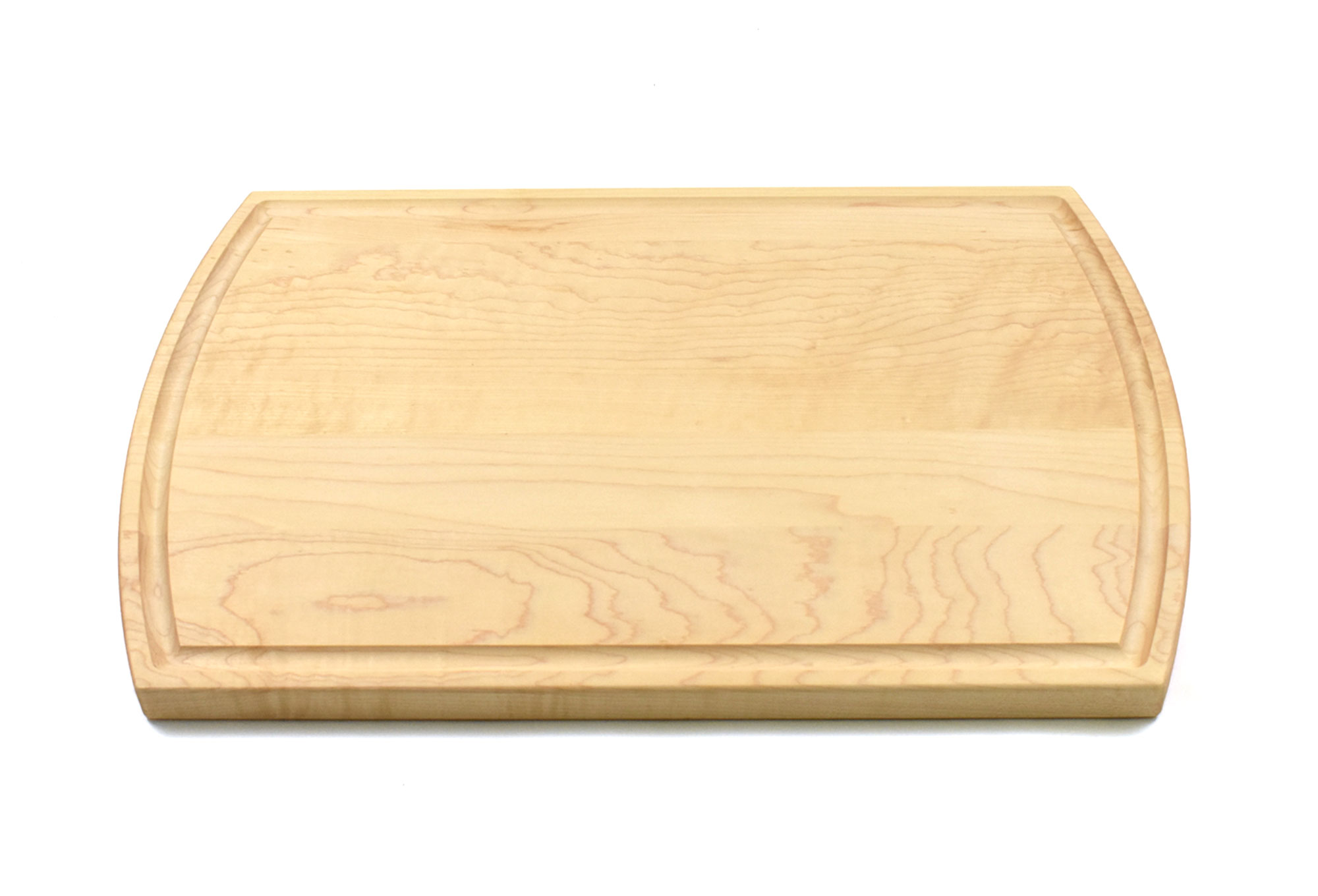
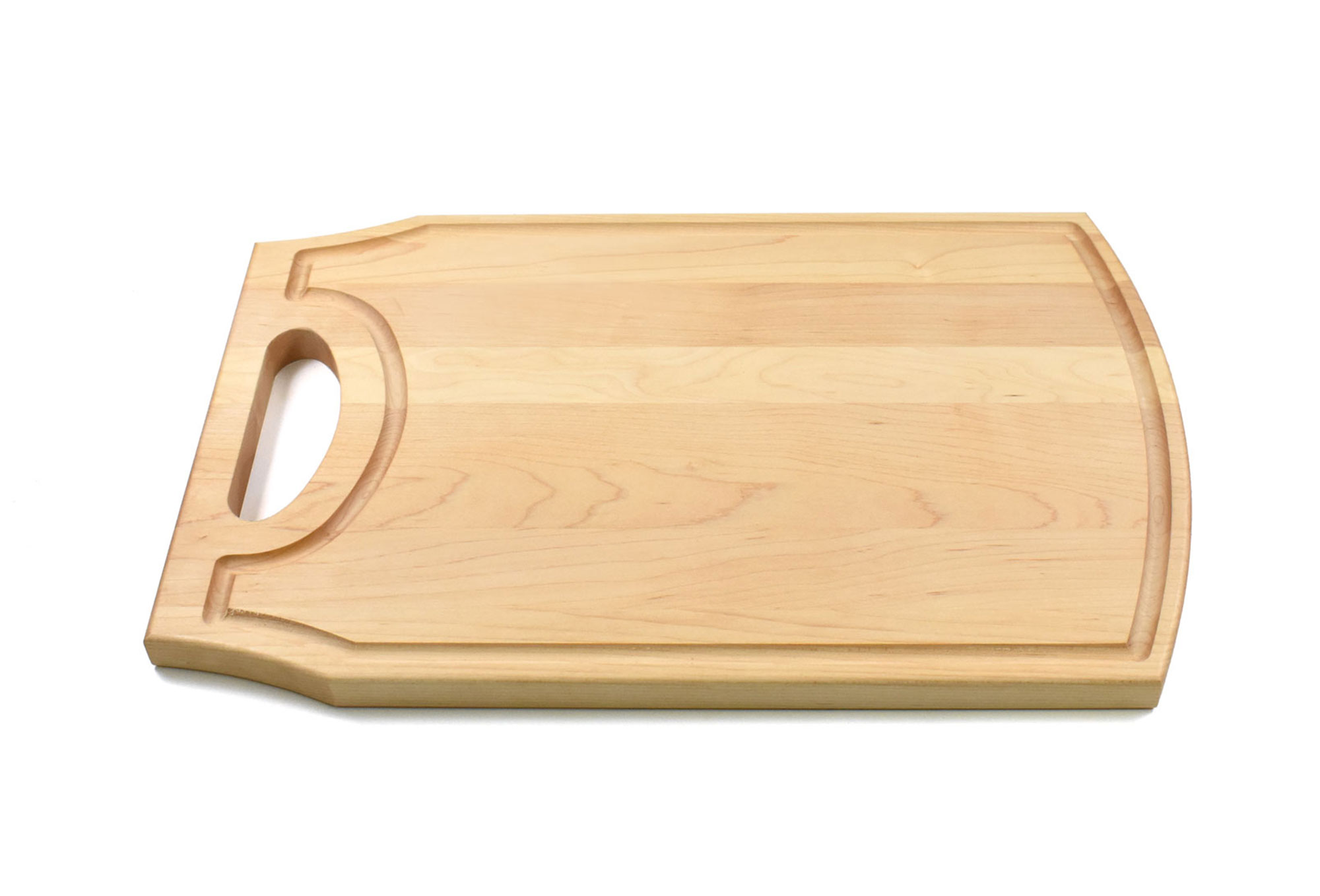
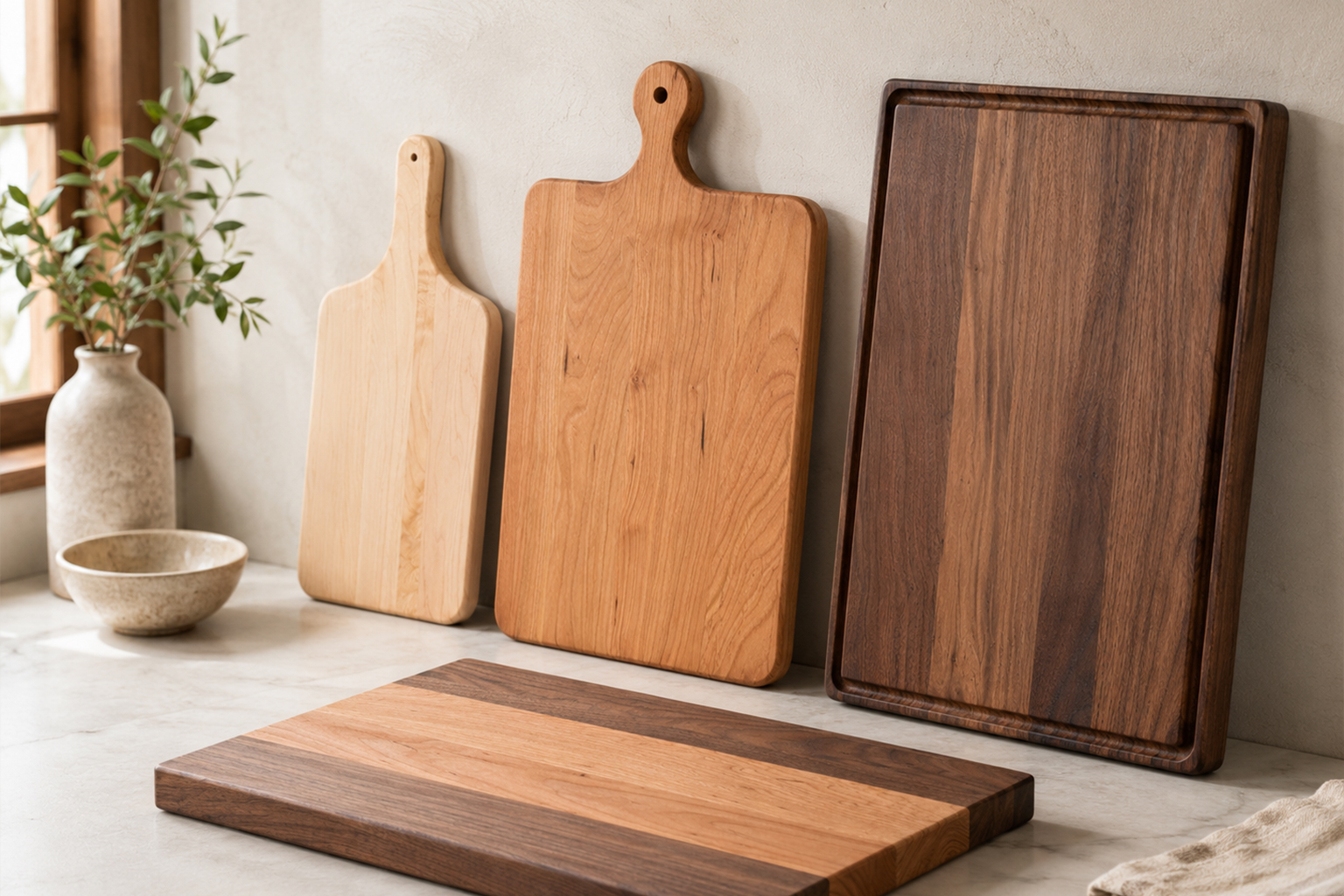
Hard maple is widely considered the gold standard for cutting boards. Its dense, closed grain structure makes it naturally resistant to bacteria while remaining gentle on knives.
Why maple is so popular:
• Very hard and durable
• Tight grain helps prevent moisture absorption
• Naturally food-safe and odor-resistant
• Light color gives a clean, professional look
• Ideal for both edge grain and end grain boards
Best for: Everyday cooking, raw meat prep, professional kitchens, and long-term durability.
Cherry: Warm Tone, Softer Feel
Cherry is slightly softer than maple, which makes it easier on knives and visually warmer in tone. Over time, cherry wood darkens naturally, developing a rich patina.
Why choose cherry:
• Softer surface — gentle on knives
• Warm, reddish color that deepens with age
• Smooth grain, easy to maintain
• Excellent for serving boards and gifts
Best for: Light to moderate prep, serving boards, and engraved or gift items.
Walnut: Dark, Elegant, and Durable
Walnut offers a darker, more luxurious appearance while still providing excellent performance in the kitchen. It is slightly softer than maple but harder than cherry.
Why walnut stands out:
• Rich, dark brown color with striking grain
• Naturally antimicrobial properties
• Good balance of hardness and knife friendliness
• Premium look for modern kitchens
Best for: Serving boards, high-end cutting boards, and decorative kitchen pieces.
Other Woods You May See
Beech: Common in Europe, beech is durable but more porous than maple and requires consistent maintenance.
Teak: Naturally water-resistant due to high oil content, but can be harder on knives if not properly finished.
Acacia: Visually striking but often more brittle and inconsistent in quality.
Comparing Popular Cutting Board Woods
| Wood Type | Durability | Knife Friendly | Maintenance | Best Use |
|---|---|---|---|---|
| Maple | Very High | High | Low–Medium | Daily prep, professional use |
| Cherry | Medium | Very High | Medium | Serving, gifts, engraving |
| Walnut | High | High | Medium | Premium boards, presentation |
Which Wood Is Right for You?
If durability and hygiene are your top priorities, maple remains the best all-around choice. For warmth and visual appeal, cherry offers a softer, elegant option. If you prefer bold contrast and a luxury feel, walnut delivers both performance and style.
Final Thoughts
The best cutting board wood depends on how you cook and how you plan to use your board. Choosing a high-quality hardwood and maintaining it properly will ensure years of reliable use.
Looking for the perfect board?
Browse our curated selection of maple, cherry, and walnut cutting boards — crafted for performance, beauty, and long-term durability.




 Manufactured in
 BRANDING SERVICES