When choosing a high-quality wooden cutting board, the two terms you’ll see most often are “end grain” and “edge grain.” Both are excellent options, but they behave differently in terms of durability, knife friendliness, maintenance, and appearance.
This guide breaks down the real differences — so you can choose the best board for your kitchen or engraving business.
What Is an Edge Grain Board?
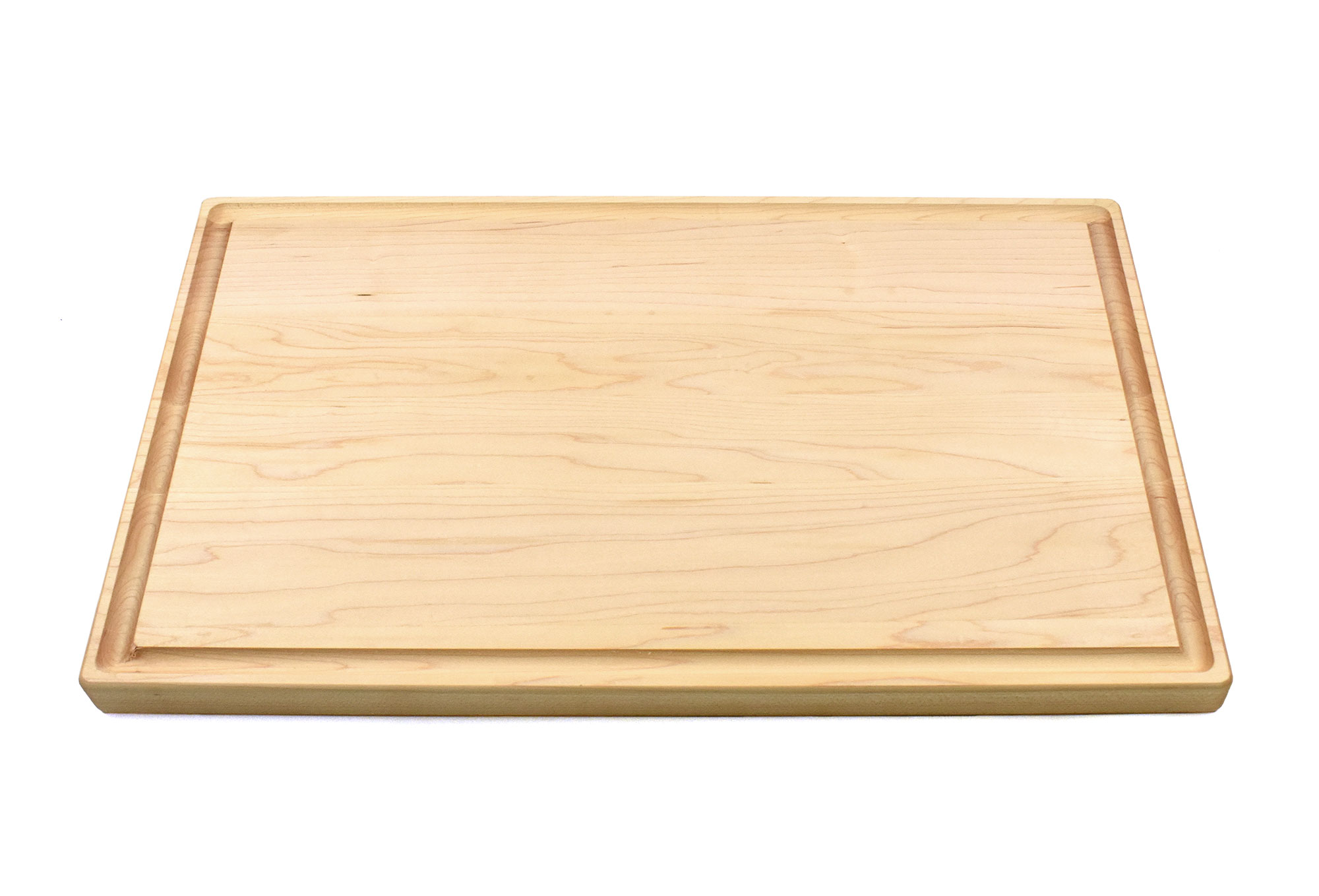
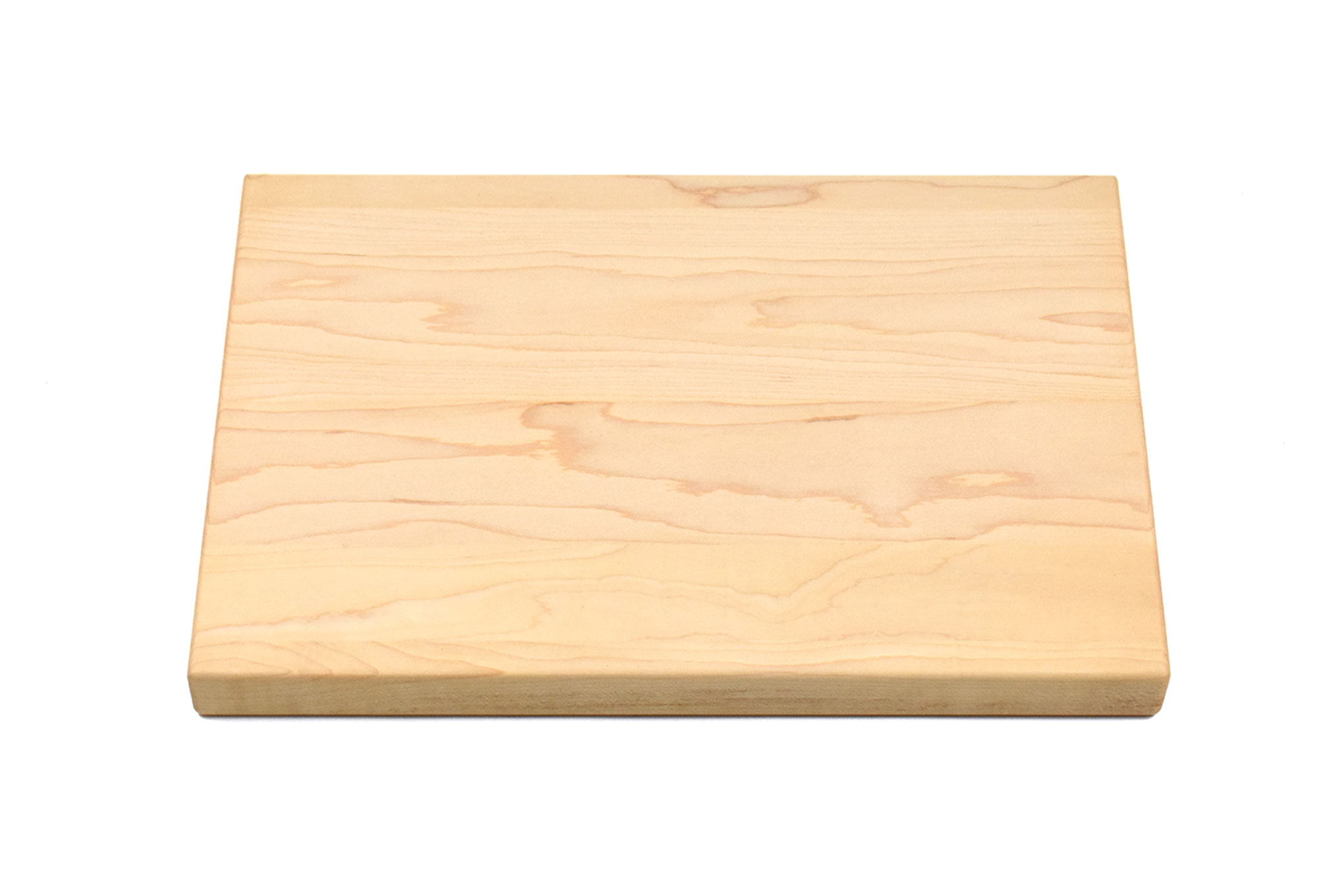
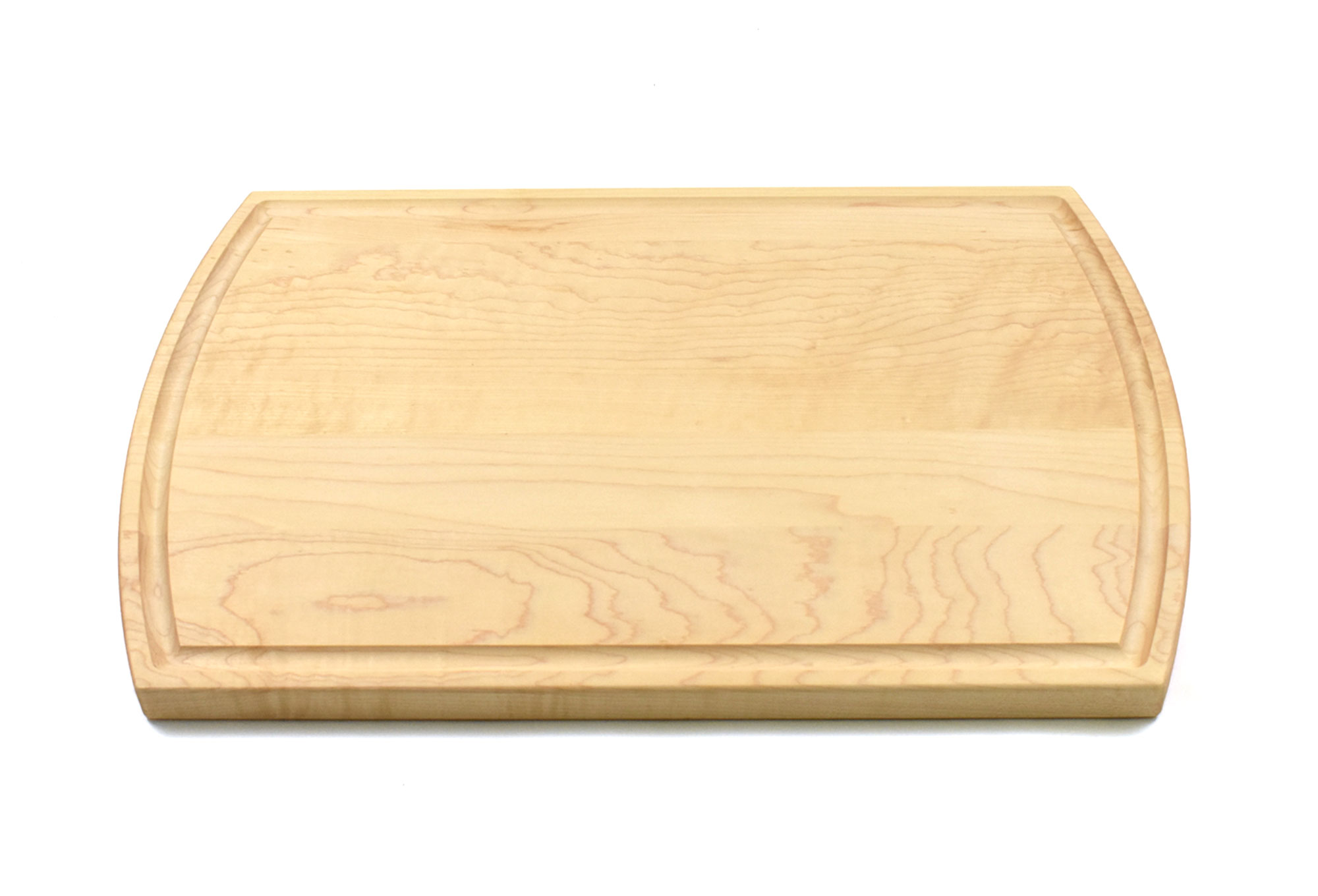
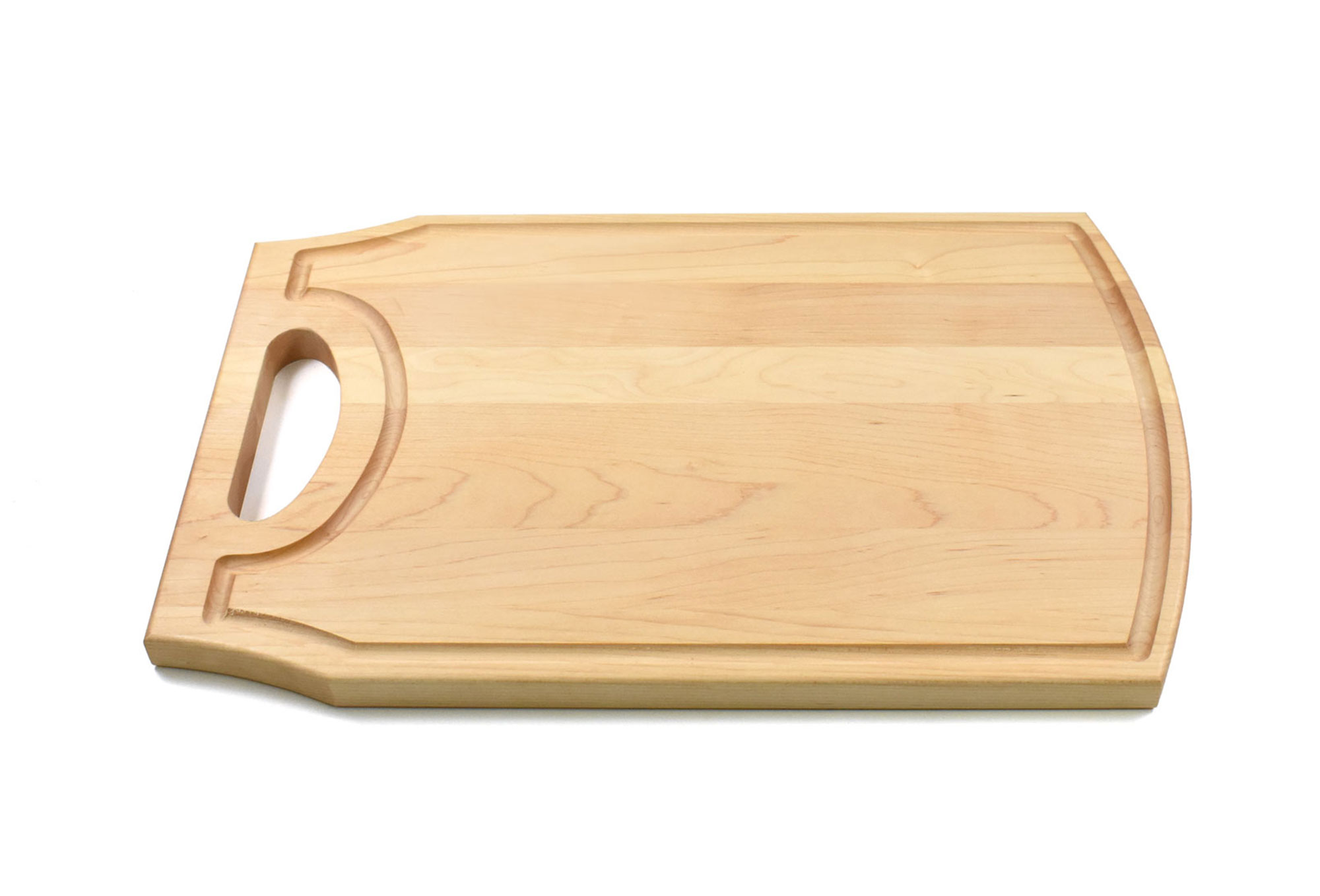
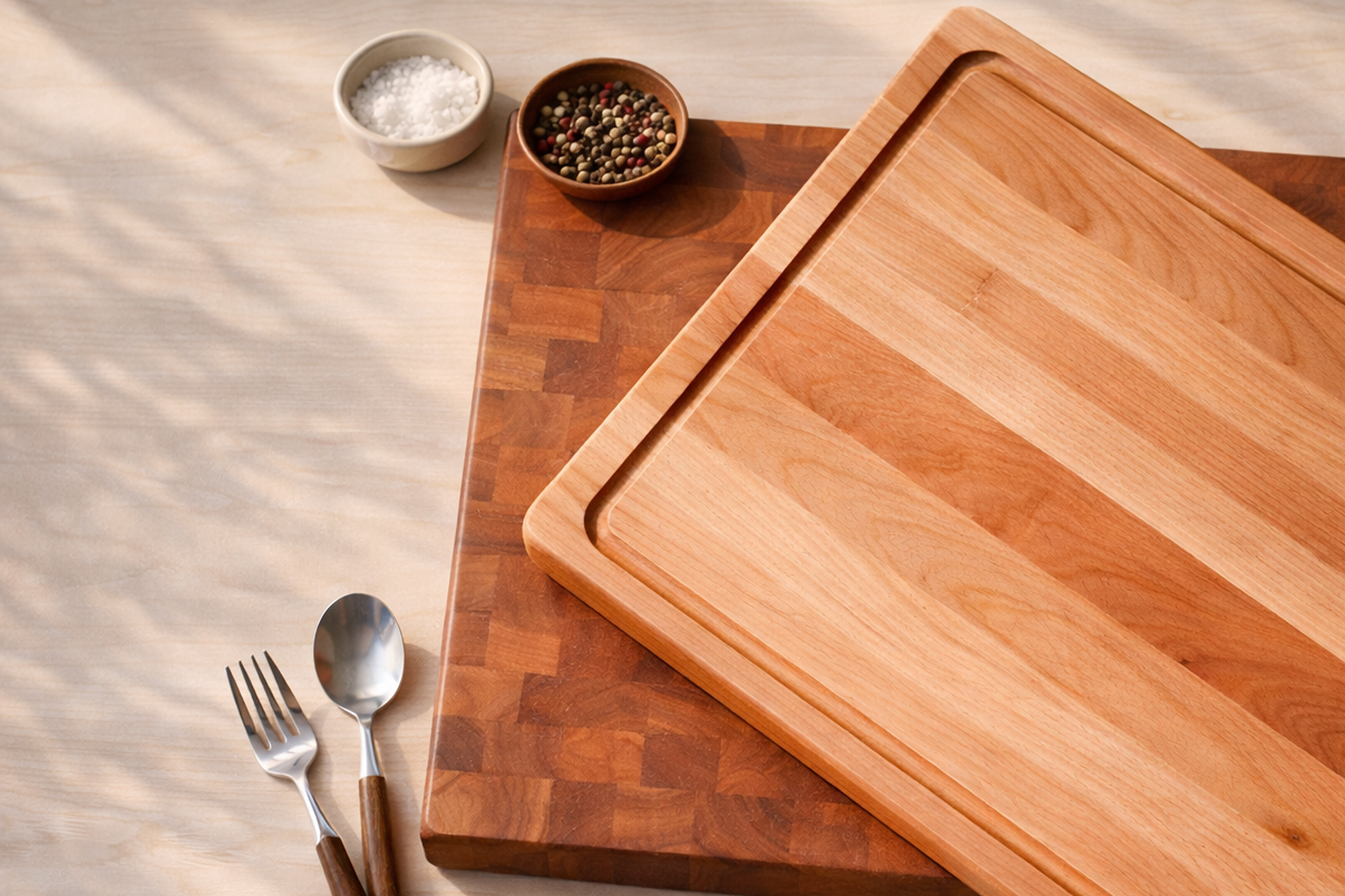
Edge grain boards are made from long strips of wood glued side-by-side, with the wood fibers running parallel to the surface. This gives the board a clean, classic look and excellent strength.
Benefits of edge grain:
• More affordable than end grain
• Lighter in weight
• Strong and stable construction
• Ideal for everyday slicing and food prep
• Smooth, uniform surface — excellent for engraving
What Is an End Grain Board?
End grain boards are constructed with the ends of the wood fibers facing upward — like a checkerboard. These fibers naturally separate when cut and then close back up, making end grain boards exceptionally durable.
Benefits of end grain:
• Highly resistant to deep knife marks
• Self-healing surface that “closes” after cutting
• Gentle on knives — prolongs blade sharpness
• Rich, premium appearance
• Superb for heavy chopping and professional kitchens
Key Differences at a Glance
| Feature | Edge Grain | End Grain |
|---|---|---|
| Durability | Strong and stable | Exceptional — built for heavy chopping |
| Knife Friendliness | Moderate | Very high — blade sinks between fibers |
| Surface Marks | Shows knife marks sooner | Self-healing effect reduces marks |
| Maintenance | Low–medium | High — needs regular oiling |
| Price | More affordable | Premium |
Which One Should You Choose?
Choose edge grain if:
• You want a durable, affordable everyday board
• You prefer something lighter in weight
• You engrave boards — edge grain is ideal for laser engraving
Choose end grain if:
• You want the highest durability possible
• You chop frequently or cook professionally
• You prefer a premium board with a striking pattern
• You want a surface that stays beautiful longer
Final Thoughts
Both edge grain and end grain wooden boards offer exceptional performance in the kitchen. Edge grain boards provide everyday strength and affordability, while end grain boards deliver superior durability, beauty, and knife protection.
Looking to compare options?
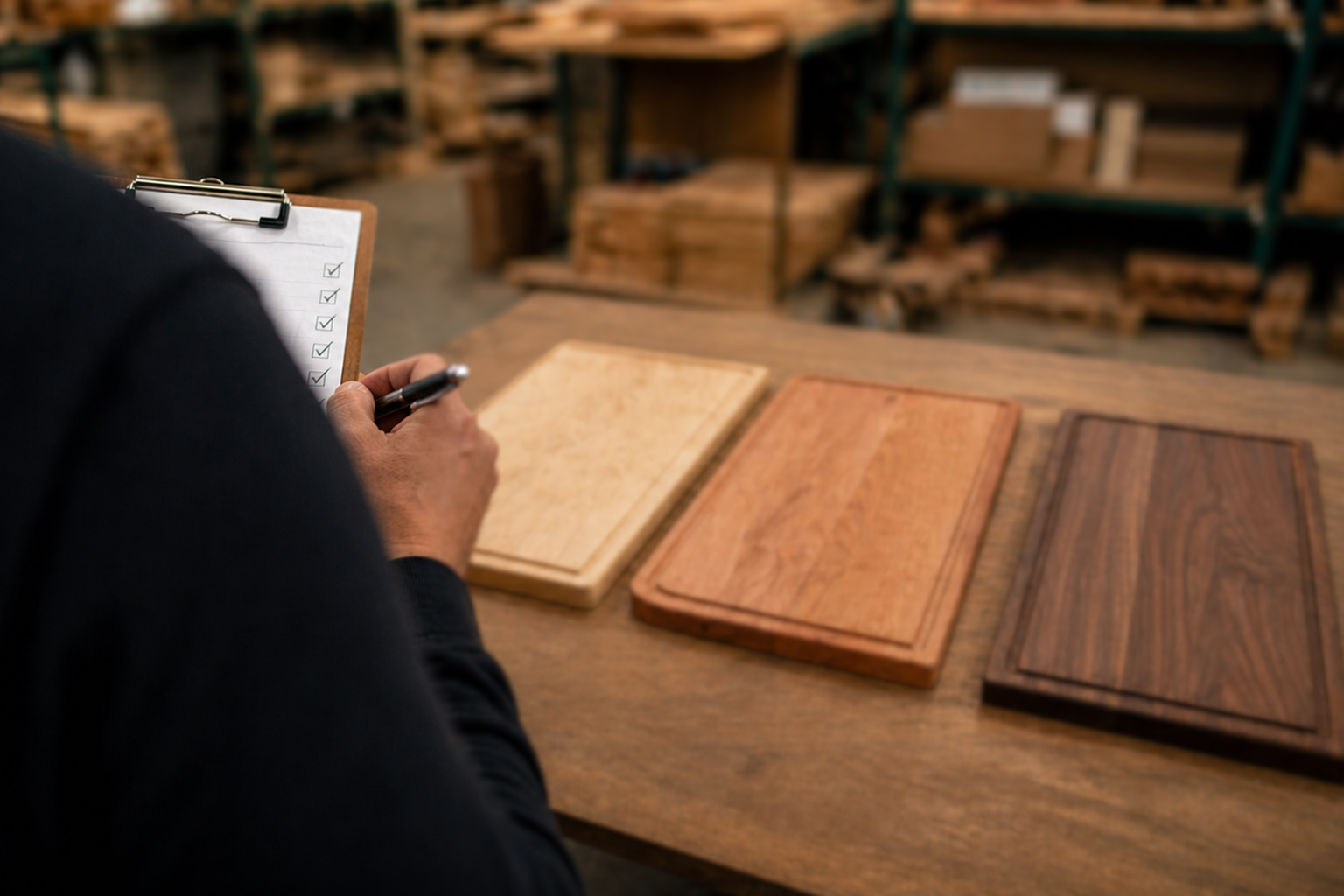
Explore our maple, walnut, and cherry collections — available in both edge grain and end grain styles, crafted for quality and long-lasting performance.




 Manufactured in
 BRANDING SERVICES