


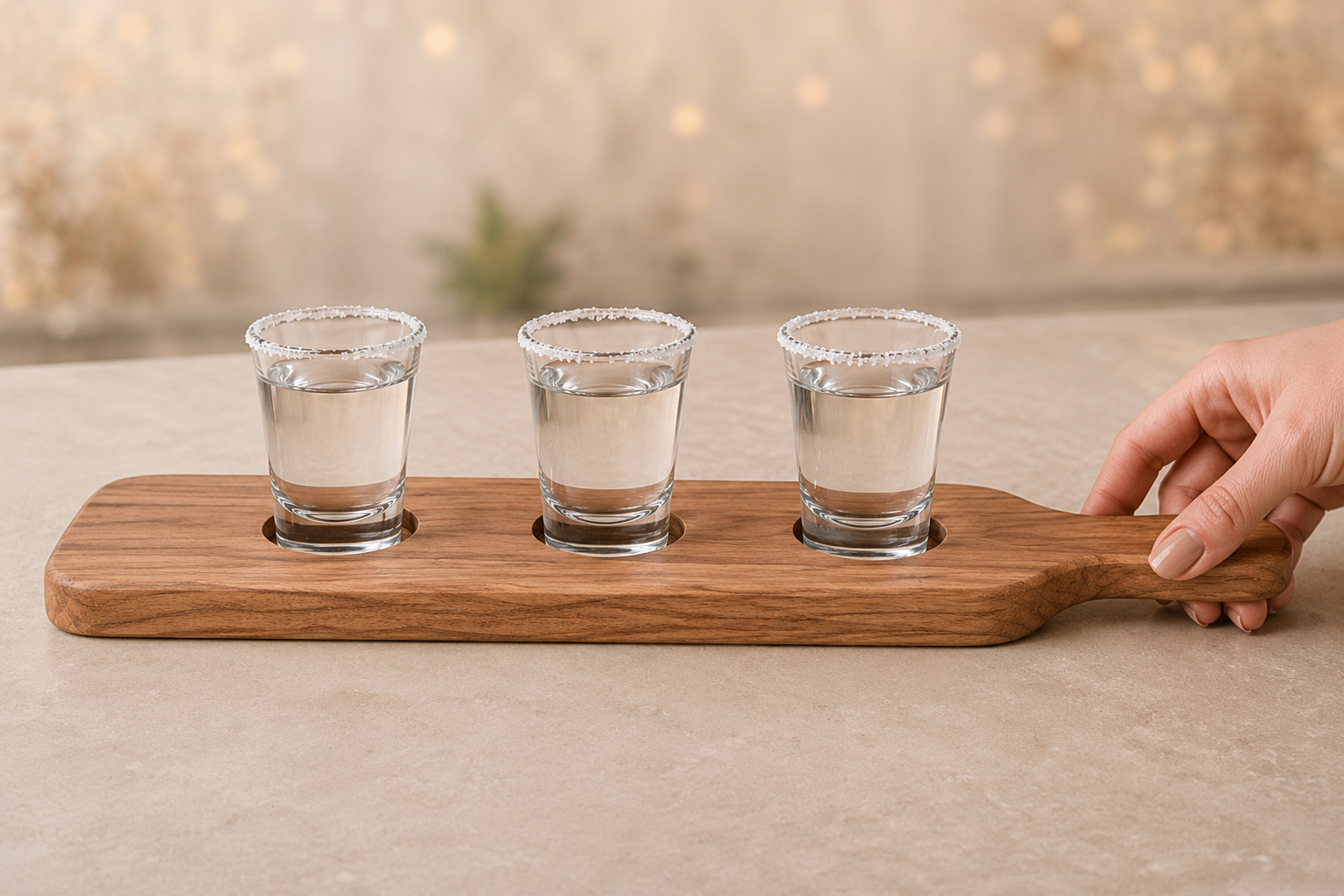
A practical look at how glassware, serving style, and sample count influence flight board selection.
Flight boards are designed to hold and present multiple drink samples together, making them easier to carry, identify, and compare. Although they are often associated with beer, different configurations can also be used for wine, shots, spirits, and other tasting formats.
The right choice depends on the glassware, the number of samples, the available space, and how the flight will be served.
Flight boards may include shallow recesses, full openings, or spaces designed specifically for stemmed glasses.
Shallow recesses allow glasses to rest on the surface while helping keep them in position. On models with full openings, part of the glass sits inside the board, so the diameter of each opening must match the glass being used.
Wine flight boards work differently. The stem of each glass slides from the edge of the board into a circular opening. The bowl remains above the wood while the base stays underneath. When the board is lifted, the wider base prevents the glass from slipping through the slot.
Before selecting a model, buyers should confirm the glass diameter, stem thickness, and base size. Even a small difference can affect fit and stability.
The number of positions should reflect the structure of the tasting.
Three-slot boards work well for focused shot or spirit selections. Four-position models can accommodate wine or beer tastings, while five-hole boards provide room for a broader beer selection.
More positions also mean additional weight and more table space. The appropriate capacity should therefore depend on the tasting format and service environment.
The shape of the board affects how it is prepared, carried, placed, and cleared.
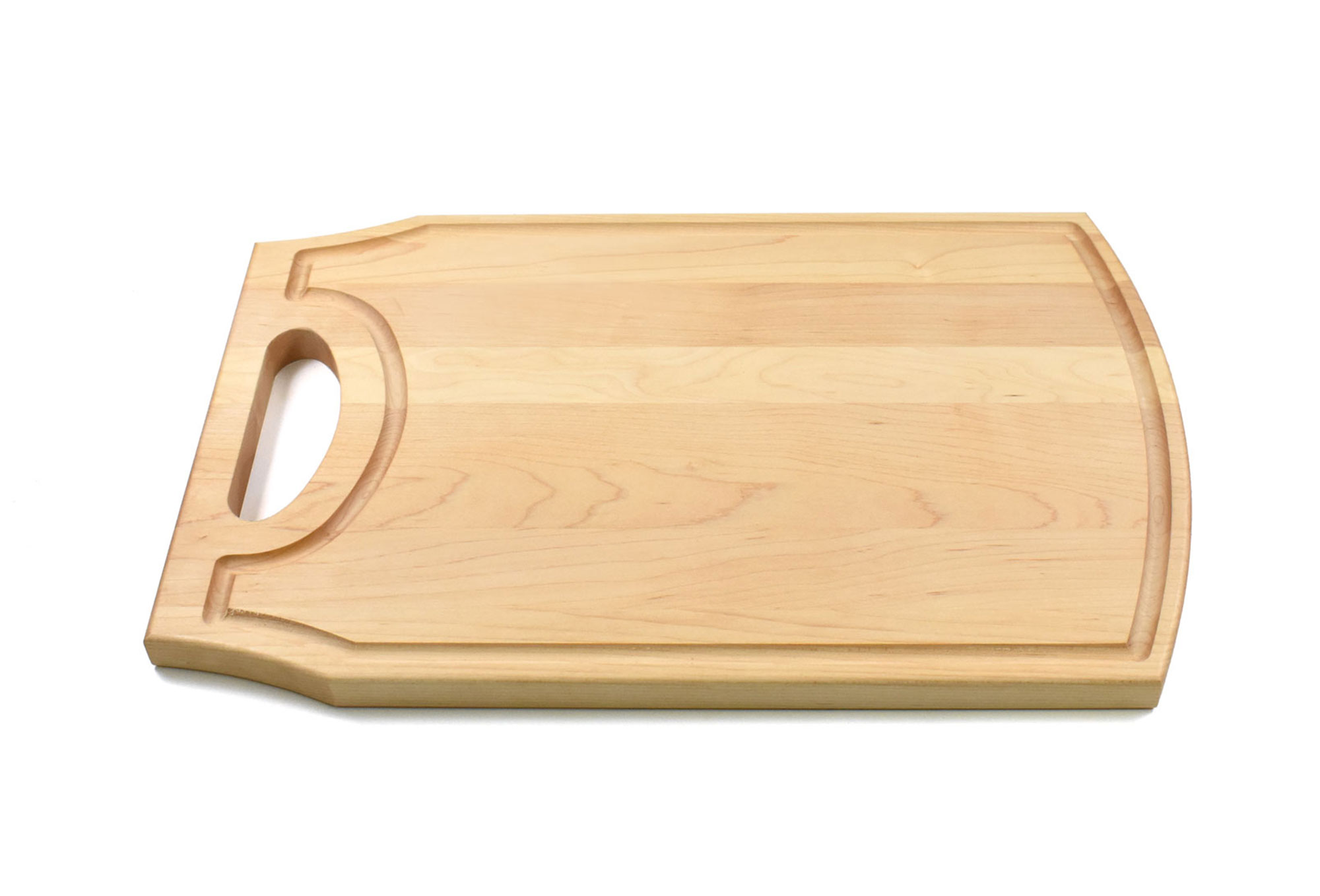
Paddle-style boards include a handle that makes them easier to carry. Depending on the model, they may use shallow recesses or full openings. Compact rectangular boards fit well on bar counters and smaller tables.
Standing flight boards hold the glasses above the table, while live-edge designs preserve the natural outline of the wood. Each format creates a different presentation, but available space, balance, storage, and frequency of use should also be considered.
The order of the samples can show customers how the drinks are intended to be tasted. They may be arranged from lightest to strongest, driest to sweetest, or according to a specific menu sequence.
Each position can also correspond with a number, printed description, or tasting card. This makes similar-looking beverages easier to identify and reduces the need for repeated explanations during festivals or high-volume service.
Personalization can incorporate the identity of a business or event without changing the board’s main function. Direct engraving may include a logo, business name, location, short message, or information related to the tasting.
Placement should be considered carefully. The engraving should not interfere with the glass openings, wine slots, or areas used to hold the board. On paddle-style models, the handle may provide a practical engraving area, while wider rectangular boards may allow for centered or side placement.
The size and complexity of the artwork also affect the final result. Highly detailed logos may lose clarity when reduced, especially on narrow surfaces. For larger orders, the engraving dimensions, orientation, and placement should be established in advance to maintain consistency across every board.
Some models may also include interchangeable plates. Unlike permanent engraving, these plates can be updated for different events, tasting menus, promotions, or partner brands without replacing the entire board.
A flight board used regularly in a taproom should be easy to prepare, carry, store, and clean. At festivals, quick handling and clear sample identification may be more important.
Guided wine or spirit tastings may place greater emphasis on order and presentation. For private events, personalization may play a larger role because of the theme, brand, or occasion.
Defining the service environment first helps prevent the selection from being based on appearance alone.
Before ordering flight boards, buyers should review:
Beer, wine, and spirit tastings do not necessarily require the same configuration. A compact shot board, a paddle board with a handle, and a wine flight board are designed for different service needs.
The selection process begins with the glassware and intended use. Once those details are clear, the capacity, shape, wood species, and type of personalization can be chosen more accurately.




 Manufactured in
 BRANDING SERVICES



.png)